
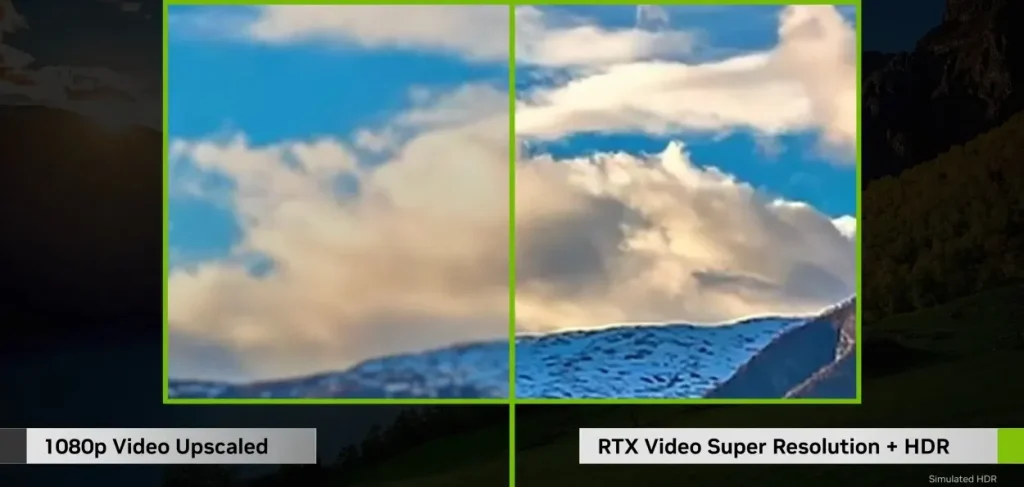
Gaming experiences today hinge on more than just visuals, and gaming graphics resolution and HDR play a pivotal role in speed perception, clarity, and immersion. Resolution, frame rates in gaming, and HDR shape how sharp, smooth, and vibrant your titles look across monitors and TVs. HDR gaming benefits go beyond brightness, delivering richer color, improved contrast, and more consistent detail during fast action. To get the most from your display, tweak gaming graphics settings such as texture quality, anti-aliasing, and sharpening to balance fidelity with performance. When choosing between 1080p vs 4K gaming, consider your hardware capability and target frame rates to find the sweet spot.
From a semantic perspective, the conversation shifts to how hardware, software, and display pipelines determine image fidelity rather than just the count of pixels. Native resolution versus upscaling techniques, such as DLSS or FSR, illustrate how performance and perceived sharpness can be balanced. HDR is part of a broader dynamic range and color accuracy discussion, influencing how bright areas and shadows are perceived. Adjusting texture detail, anti-aliasing, and motion smoothing alongside your display’s refresh rate lets you tailor visuals to your preference.
Gaming graphics resolution and HDR: Optimizing clarity, color, and immersion
In modern gaming, the graphics pipeline hinges on two big ideas: gaming graphics resolution and HDR. The resolution determines how many pixels the game draws, influencing texture sharpness and overall image fidelity, while HDR expands brightness, contrast, and color volume to deliver more lifelike scenes. When you compare 1080p vs 4K gaming, remember that the visual payoff grows with screen size and viewing distance, but so does the GPU workload. HDR gaming benefits are especially noticeable in scenes with bright highlights and dark shadows, adding depth that makes textures and post-processing pop.
To get the most from your hardware, balance matters. If your display supports HDR, enable it at both the OS level and in-game settings, and calibrate brightness so that whites aren’t blown out and blacks aren’t crushed. You can protect performance by leveraging upscaling technologies (like DLSS or FSR) to render at a lower resolution and upscale to your display’s native resolution, preserving perceived detail while boosting frame rates. Fine-tuning gaming graphics settings—texture detail, shadows, and anti-aliasing—helps you achieve a practical mix of clarity and performance without sacrificing too much of the HDR experience.
Balancing frame rates, upscaling, and graphics settings for smooth gameplay
Frame rates in gaming are a measure of how many frames are shown every second, and they matter because higher fps translates to smoother motion, snappier input, and better tracking in fast-paced titles. The relationship between resolution and frame rate is a constant trade-off: cranking up resolution means more pixels to render, which can reduce fps unless you optimize with GPU power or smart upscaling. For action games and competitive shooters, many players target steady 60–120 fps to maintain responsiveness.
To optimize frame rates in gaming, you can adjust gaming graphics settings—lowering resource-heavy options like shadow quality, ray tracing, and post-processing can yield big fps gains. Upscaling methods (DLSS, FSR) let you render at a base resolution and upscale to your target display resolution, preserving detail while keeping frame times low. Depending on your monitor, you might prefer 1080p for max fps or 4K with upscaling for crisper textures; remember to enable synchronization options (G-Sync/FreeSync) to minimize tearing and stutter while you chase a consistent frame rate target for your preferred genre.
Frequently Asked Questions
How does gaming graphics resolution affect frame rates in gaming, and should I choose 1080p vs 4K gaming when HDR is enabled?
Resolution sets how many pixels your game renders. Higher gaming graphics resolution delivers sharper images but increases GPU load, which can lower frame rates in gaming. For HDR-enabled titles, you might start at 1080p or 1440p for higher FPS, or use 4K with upscaling (DLSS, FSR) to preserve HDR detail while keeping frame rates higher. Ensure your monitor supports HDR and HDR is enabled in both game and OS settings.
What are HDR gaming benefits, and how can I optimize gaming graphics settings to balance HDR quality with smooth frame rates?
HDR gaming benefits include richer colors, improved contrast, and brighter highlights, which enhance immersion. To balance HDR quality with smooth frame rates, enable HDR in-game and system settings, choose a resolution your GPU can render comfortably, and use upscaling techniques (DLSS, FSR) when needed to maintain frame rates. Fine-tune brightness and color calibration for your display to get the most from HDR.
| Aspect | Description | Impact / Notes |
|---|---|---|
| Resolution | Resolution is the number of pixels displayed on your screen. It sets the maximum sharpness and detail you can perceive in-game. Higher resolution improves image fidelity, especially on larger monitors, but requires more GPU power. | Higher resolution increases image fidelity on larger monitors but demands more GPU power. |
| 1080p (1920×1080) | Baseline resolution with solid clarity and modest GPU requirements. | Good performance target for many systems. |
| 1440p (2560×1440) | Sweet spot with crisper detail; higher GPU demands than 1080p. | Balanced image quality and performance for many setups. |
| 4K (3840×2160) | Pinnacle pixel density; requires powerful GPU and high frame rates or efficiency tricks. | Best image quality on capable hardware; may need upscaling or settings compromises. |
| Upscaling and rendering tricks | Technologies like upscaling (DLSS, FSR) render at a lower resolution and upscale to your display’s native resolution. This preserves perceived detail while easing GPU load. | Can deliver near-native quality with higher FPS, especially on mid-range hardware. |
| Frame rates | Frame rate is the number of frames shown per second (fps). Higher fps yields smoother input response and better tracking. | Trade-off: higher resolution can reduce fps unless you upgrade GPU or use upscaling. |
| HDR | HDR enhances color and contrast for more vibrant images; requires compatible display and content. | Adds depth and realism, boosting perceived image quality when supported. |
| Interaction of elements | Resolution, frame rate, and HDR collectively determine sharpness, smoothness, and vibrancy in games. | Optimizing for your hardware and play style yields the best overall experience. |
Summary
Conclusion: In exploring gaming graphics resolution and HDR, you discover how sharpness, brightness, and motion feel are interconnected across your hardware and settings. By selecting an appropriate resolution, leveraging upscaling when needed, and enabling HDR on a capable display, you can tailor visuals to your preferences and hardware constraints. The key is balancing image fidelity with performance, so you can enjoy smooth gameplay, responsive controls, and immersive color without overburdening your GPU. With thoughtful tuning, you can achieve striking detail and lifelike brightness that elevate your gaming experience.